


InfoLab, from Laboratorio Electoral, is the only Substack publication that tracks and explains the electoral landscape of Mexico and Latin America in an accessible way: we share daily news, summaries of meetings held by electoral authorities, and expert analysis from our team of specialists.
Our goal is simple: to help you understand the political and electoral landscape of Mexico and Latin America with perspectives that don’t always find a home elsewhere.
Your support keeps this project alive and allows us to continue sharing this work freely and accessibly. Subscribe and share it.
As Latin America enters a new cycle of elections, democratic transitions, and a regression in the defense of human rights, migration, and state accountability, the 2026 FIFA World Cup is taking place in a similar and turbulent political context.
Mega-events are never isolated from the societies that host them: they often amplify existing tensions, expose institutional weaknesses, and reveal the priorities of governments, that normally seek to project a positive international image. The excitement of the World Cup can make us forget almost anything, but it is important to remember that the FIFA spectacle has historically gone hand in hand with the systematic violation of human rights and complicity in systematic abuses committed to ensure that the tournament is considered a “success.” We would like to reflect on a few examples.
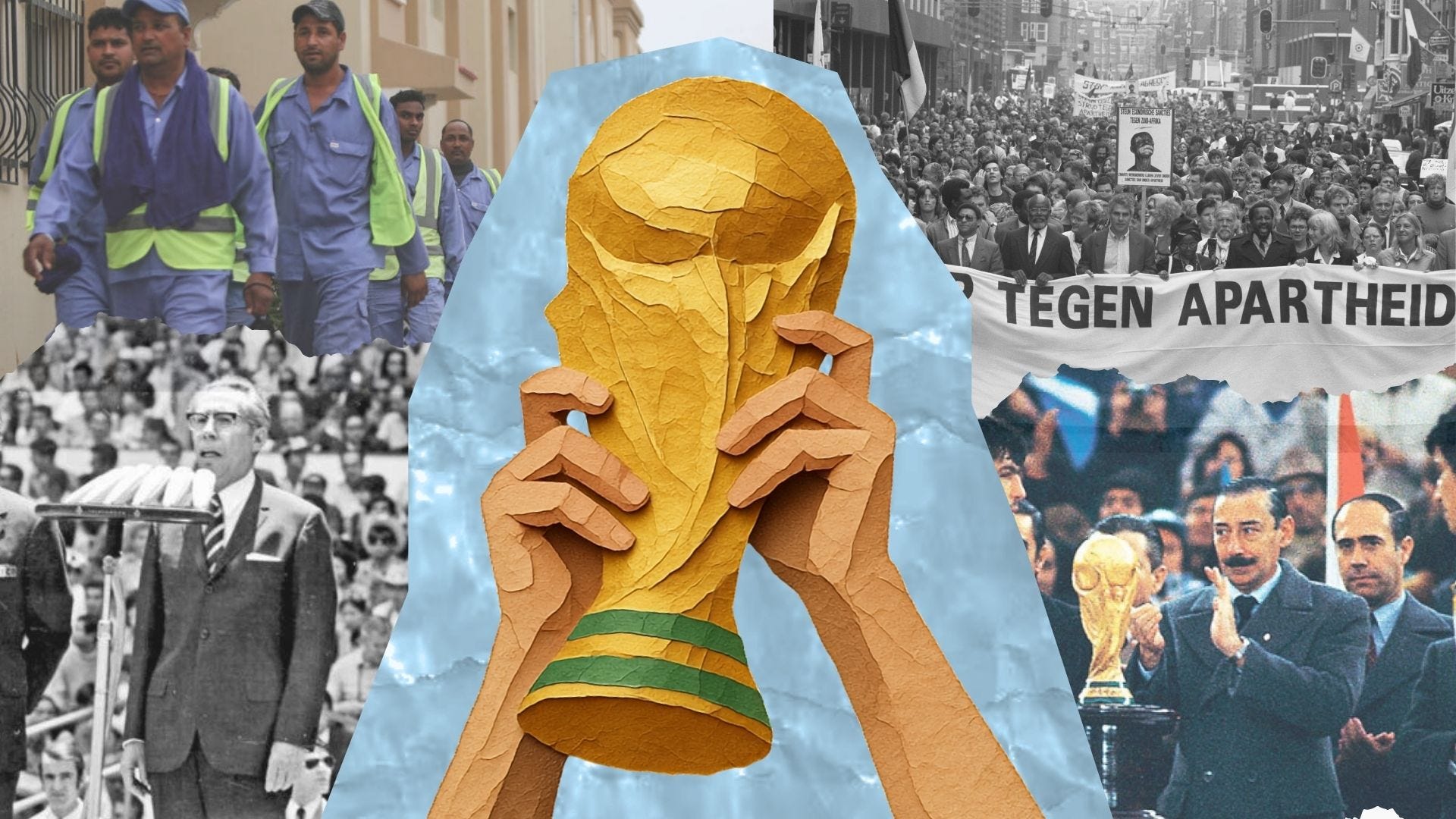
In England ’66, while global agreements against discrimination were being adopted, FIFA chose to ignore the boycott by 15 African countries protesting the apartheid regime in South Africa. Four years later, in Mexico ’70, the government imposed brutal military censorship to silence reports of the Tlatelolco massacre committed by the State. In Argentina ’78, the tournament was played under a military dictatorship that operated clandestine detention and torture centers just a few blocks from the stadiums.
One might think this was something that happened only in the last century, but recently—during the 2022 World Cup in Qatar—we witnessed the Kafala system, which was used to build the tournament’s entire infrastructure; this system bound millions of migrant workers to their employers by depriving them of control over their passports and visas, leading to the deaths of thousands of workers without them being investigated.
This occurred despite FIFA’s attempt to amend its statutes in 2016. Article 3 mandates that all participating countries respect human rights. Furthermore, for the 2026 World Cup, the three host countries and each of the host cities signed binding contracts regarding labor and social protections.
Despite this, the United States is facing a crisis caused by discriminatory immigration policies that, as of 2025, had led to the deportation of more than 500,000 people—six times the capacity of MetLife Stadium. Canada is experiencing a severe housing crisis that has persisted since the 2010 Vancouver Winter Olympics.
And here in Mexico, there are more than 130,000 missing persons, and numerous cases of police abuse against protesters were documented during the inauguration ceremony—protesters who seized upon the global attention focused on Mexico to bring the country’s problems to light.
As governments across Latin America seek democratic legitimacy through elections and public participation, international events like the World Cup also become tests of their commitment to rights, transparency, and accountability. If a World Cup must continue to be held at the cost of silencing, dispossessing, or repressing people, then the spectacle has ultimately been prioritized over basic respect for human rights. The real legacy of the tournament will not be measured only by goals or attendance, but by whether democratic governments are willing to place human dignity above international prestige.
At what point did we accept that a party is worth more than dignity?