



InfoLab, from Laboratorio Electoral, is the only Substack publication that tracks and explains the electoral landscape of Mexico and Latin America in an accessible way: we share daily news, summaries of meetings held by electoral authorities, and expert analysis from our team of specialists.
Our goal is simple: to help you understand the political and electoral landscape of Mexico and Latin America with perspectives that don’t always find a home elsewhere.
Your support keeps this project alive and allows us to continue sharing this work freely and accessibly. Subscribe and share it.
Liberal democracy remains, even today, the primary mechanism through which various actors access power, and therefore demands constant evaluation from the country, an effort to identify its shortcomings, and ongoing work to improve it. This means that democracy is alive and that debates sometimes arise around issues such as the details of its electoral system, institutional redesign, or—more commonly—spending-cutting measures that circumvent the real needs of its apparatus. In Mexico, this constant review is more the rule than the exception.
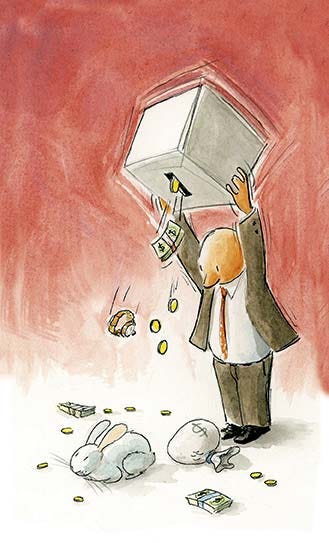
Simultaneously, there is a hidden dimension within these conversations that silently hinders the most important changes, jeopardizing the survival of democratic integrity: illicit money. This has been used as a driving force for violence and as a tool for consolidating criminal regimes. Despite its prevalence, this issue remains conspicuously absent from legislative agendas.
The recent elections in Mexico have been accompanied by a sustained increase in cases of violence against candidates, pre-candidates, and those aspiring to public office. Various reports have warned that electoral violence is a phenomenon that seeks not only to neutralize or punish specific candidates, but also to disrupt political competition and manipulate election results through disputes over territorial control, the management of public resources, and influence over government decisions.
In this sense, elections become a critical moment of vulnerability in the face of criminal actors who can finance campaigns, intimidate candidates, or take over entire local governments to act as a parallel and complementary element to state authority. This process generates a cycle of agency capture where electoral success, supported by illicit resources, guarantees access to state resources, which in turn enables the reproduction of illicit economies and the perpetuation of patterns that benefit and undermine certain parties and candidates at the polls. Once in power, attacks against officials in key areas of state resource management also open the door to the systematic diversion of public resources to the same criminal groups.
Considering this—and due to recent electoral reform initiatives—various legislators have put their finger on the sore spot of illicit party funds originating from criminal groups, as they have argued that reducing public financing could lead or push them to accept money from organized crime or money laundering. Other parliamentary groups, however, have asserted that rigorous mechanisms for detecting and sanctioning illicit funds are needed. Such sanctions could include the annulment of elections and/or loss of registration for the candidates or parties, as well as criminal investigations into parties, candidates, and leaderships upon evidence of funding from illegal sources or links to organized crime.

Although it is impossible to know with certainty how much money circulates under this dynamic, in the 2018 elections alone, Integralia Consultores and Mexicanos Contra la Corrupción e Impunidad estimated that, for every peso spent by a gubernatorial candidacy, there are 15 pesos that are not audited, which amounts to over 1,400% that is not declared and is spent “under the table.”
In addition, in 2024, Laboratorio Electoral reported that nearly 40% of the National Electoral Institute’s (INE) audit sanctions were related to unreported expenses. This mass of resources flows through slush funds, which are used for activities that, by their nature, cannot be reported, such as vote buying, payments to local political operatives, and the hiring of intimidation services.
These figures help illustrate the magnitude of a form of political competition shaped no longer by citizens’ free choice over who will represent them, but rather by how the resources needed to carry out a highly publicized and well-paid—or well-collected—campaign will be obtained once it begins to yield returns (a campaign that does not culminate in electoral victory is not necessarily considered a failed campaign).
Under this logic, illicit financing alters the conditions of electoral competition, but it also reconfigures all the power relations established among political, economic, and criminal actors during electoral processes, largely determining how violence unfolds among them.
We believe that electoral violence manifests not only in the form of terror and bloodshed, but also in the highly complex path that dirty money follows to insert itself into the ordinary functioning of a political party or a candidate’s campaign. Within this dynamic lies the threatening power of an attack or violent event that does not necessarily materialize, but whose mere possibility operates as a mechanism of pressure. That power is traded, as it becomes a form of negotiation in which the latent threat is offered as currency for concrete benefits under the familiar logic of plata o plomo— take the bribe or take the bullet: “if you grant me construction contracts, clandestine access to channels connected to the state and the private sector, or other benefits, I will contain the violence.”
What the constitutional reform would have done
The latest electoral reform initiative proposed strengthening coordination between public security, justice, and financial intelligence authorities with the INE to monitor the registration of candidates and oversee contributions to political parties, and that the financial operations of all parties must be reported or notified daily by financial institutions to the INE.
However, the problem would not have been resolved there and would have required additional measures; first, because it assumed more rigorous mechanisms for the oversight of political parties, but also contemplated the reduction of privileges—a scheme similar to that applied to the electoral authority, for which the budget is reduced but greater optimization and efficiency in the use of resources is demanded.
Second, because this is not only the direct responsibility of parties and candidates, but also of the institutions that have made it possible…
Increasing or decreasing party funding would not have the desired effect without regulating the informal rules embedded in the corrupt machinery that has driven Mexican politics. These informal rules range from the sale of candidacies (especially at the local level within parties or municipal and state structures, where land use and construction permits are co-opted, contracts are awarded, local police are controlled, waste management and other public services are managed, and where criminal organizations seek to seize control of these areas not only for drug trafficking but also to diversify their income), the negligence, incapacity, or unwillingness of parties to support their candidates, and to the systematic practices within the parties’ internal culture that fail to improve or strengthen their internal mechanisms and democracy.
There will be no real effect if sanctions continue to target only political parties, since, in practice, political parties already make extensive use of illicit financing—from both legal and illegal sources—regardless of their privileges, because the current regulatory framework is lax and sanctions do not act as a true deterrent. Parties already include the payment of fines for violating electoral rules in their campaign expenditures, and the law itself allows them to exceed the campaign spending limit without major consequences, unless it can be demonstrated that this had a real impact on the election results.
In the absence of effective criminal penalties or the automatic revocation of registration and the annulment of the election upon evidence of links to organized crime, the system itself (with specific names and surnames) creates incentives to be ignored. The risk of being fined is low compared to the benefit of obtaining political power and the access to state resources that comes with it.
It is worth recalling that one of the main arguments for increasing public funding for political parties in 1996 was to prevent interference from special interest groups and promote a level playing field in elections. In practice, this legislation proved ineffective. Given this reality, proposals for electoral reform are often insufficient, as they ignore the structural nature of the link between politics and crime; therefore, suggesting that less public funding will force parties to resort to illicit funds may be negligent.
Furthermore, assuming that stricter regulation of private donations, as proposed in the reform initiative, could by itself reduce the flow of money from crime ignores the informal nature of the financial circuits through which these groups operate. Funds derived from criminal activities rarely appear as formal bank donations; they circulate in cash, through shell companies, or by delivering goods and services in kind that are never recorded in the parties’ official accounting records.
As Schmidt et al. (2025) illustrate, this financing model has proven to be, above all, symbolic legislation—that is, a law passed as a performative act to satisfy short-term political demands and appease public opinion, but without any real intention of being enforced. This is also evident in the demands placed on the INE to undertake rigorous oversight and monitoring of daily financial operations—tasks that exceed its technical and operational capacities—while its budget is being cut. Reforms limited to institutional design or budget cuts are superficial solutions to a problem of structural capture.
It is imperative that the monitoring of these issues involves effective and mandatory coordination between electoral authorities, specialized prosecutors, financial intelligence units, and public security agencies, to detect unusual spending patterns in a timely manner and investigate criminal links involving candidates and parties.
The legislative agenda still faces the pending task of debating the annulment of elections in cases involving evidence of illicit financing or widespread violence linked to criminal organizations and their alliances with actors who are formally expected to operate within the law. It must also address the autonomy of local electoral bodies by providing them with the resources and protection necessary to carry out oversight functions in conflict-ridden areas, as well as the digitization of politics, which requires regulating the use of cryptocurrencies and micro-targeted advertising financed with resources of unknown origin.
This demonstrates that the problem lies not only in how much money parties receive, but in the government’s inability to control the informal networks that sustain political competition. And it is precisely within this web of informal incentives, weak sanctions, opaque money flows, and contexts of violence that the problem intensifies with every election.
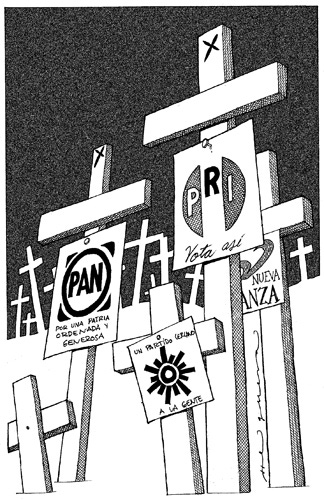
The devil will continue to be in the details if illicit funds circulate quietly in campaigns and violence determines who has the right to govern, who can compete, and under what conditions political power is exercised. The integrity of our democratic processes depends on ensuring that political power truly emanates from free elections and not from negotiations with organized crime. The cost of this pretense is the definitive loss of institutional autonomy and the degradation of the democratic system into a form of criminal governance legitimized by the ballot box.
References
Schmidt, S., Martínez Cárdenas, T. M. ., & Jimenez Escamilla, N. (2025). ¿Por qué es inviable el financiamiento público a los partidos políticos para limpiar la política del dinero ilegal?. Revista Mexicana De Estudios Electorales, 9(33), 55–100. https://rmee.org.mx/index.php/RMEstudiosElectorales/article/view/477